If you’ve been around here for a while, you know I nerd out on history and how it influences design. Some of my favorite projects, like the white oak Gustavian nightstands I built a few years ago, were born from this curiosity. Because our home is a French Colonial, I spent countless hours researching the era of the French Revolution to understand why furniture looked the way it did, what was happening in the world at the time, and how those things influenced both form and function.
For me, honoring history helps me create spaces that feel grounded, intentional, and meaningful. My design process typically begins with studying the past to inform the present, adding depth and purpose to each space.
The Highland Study is no exception. Instead of simply filling the space with furniture that looks “old,” I’ve been digging into the origins of the pieces that truly belonged in rooms like these and why they existed in the first place.
Enter British military campaign furniture.
What Is Campaign Furniture?
Campaign furniture feels instantly familiar with its brass corners, recessed pulls, and sturdy construction, but the origins of its distinctive design are less well known. As I’ve been designing The Highland Study, campaign furniture keeps popping into my head. Before diving into finishes or design decisions, it’s worth sharing the history, since it often guides my choices.
Campaign furniture originated in the 18th and 19th centuries, developed specifically for British military officers who were frequently posted across the world. These men lived in a state of near-constant movement, traveling by ship, horse, or carriage, and needed furniture that could be moved from one posting to the next. These pieces were designed to be portable, durable, and easily assembled and disassembled for travel. Typically made of hardwoods such as mahogany and teak, they were prized for their resilience and the prestige they conveyed.
Unlike traditional household furniture, campaign pieces featured:
Reinforced brass hardware to prevent damage
Modular construction for easy packing and reassembly
Restrained, dignified styling suitable for both field quarters and formal interiors
Not only was campaign furniture practical, but it also reflected the social status and taste of its owners, serving as both a necessity and a subtle statement of rank in the field. That blend of form and function feels especially fitting for The Highland Study. After more than two decades of military service, Adam’s life has echoed many of those same themes: discipline, adaptability, and a profound sense of purpose. Incorporating campaign furniture is a way to honor that legacy through intentional design and historical significance.
Design Dilemma: Honoring History or Reinterpreting Tradition
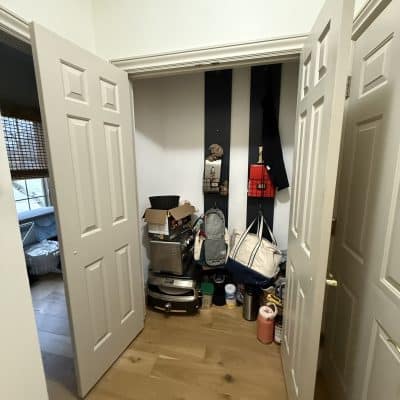
As much as I’d love to hunt down an antique campaign chest, authentic pieces often cost $8,000 or more, which is far beyond my budget for this renovation. So, in true Jen fashion, I’ll take the DIY route and build one myself, which opens up even more possibilities for finish and style.
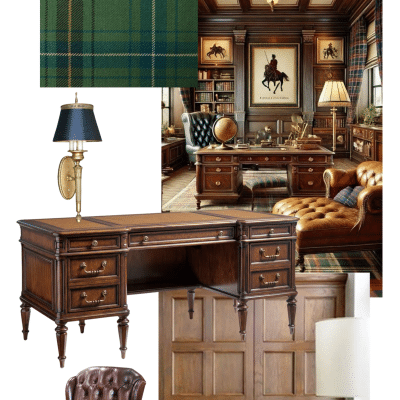
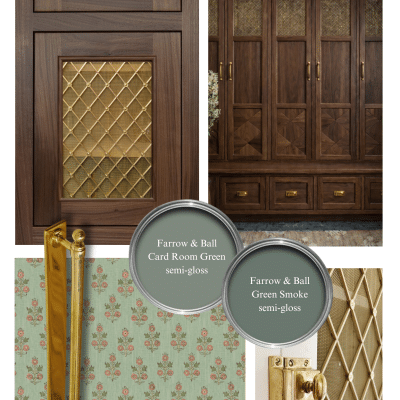
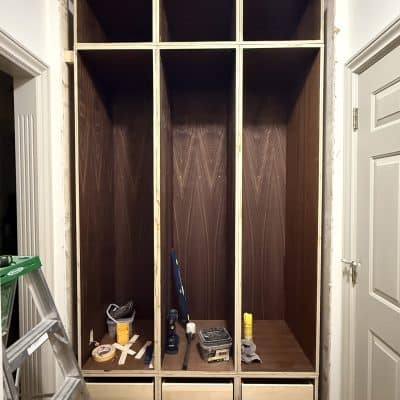
Here’s my design dilemma. The space will already feature a lot of walnut woodwork and Adam’s vintage wood desk, so adding another large wood case piece requires intention. As I plan to build one for the Highland Study, history provides guidance, but it doesn’t always have to dictate the final outcome.
I’m weighing three options for the campaign chest:
Mahogany: the traditional, historically dominant choice
Oxblood: a painted finish that feels rich, tailored, and well-suited to heritage interiors
Military green: restrained, functional finishes that nod to service and utility
Each option honors history in a slightly different way, which will shift the tone of the room. Should the chest lean fully traditional, or offer contrast and visual relief? I’d love to hear your thoughts and reasoning – please share them in the comments below.
Ooh, tough choice. My first instinct is not to paint wood, but that oxblood could be so chic! And it feels very close to a mahogany wood tone anyway… I’m torn between the mahogany and oxblood. Can’t wait to see what you come up with!
Hello, good morning! If you’re going with the green plaid wallpaper, I think the Oxblood is the best choice. It will stand out a bit, but that’s a good thing.
I’m loving these design posts, btw! OG blog reader, here.
I love all the choices you are considering but being an Air Force brat growing up and a Marine Corps Officer traveling the world I personally would go for the traditional look…but that is just me! I know whatever choice you make it will be awesome on so many levels. Love your energy, creativity, and entrepreneurial spirit! Looking forward to the Campaign Chest results! Cheers!
Great post! The connection between military history and furniture design is fascinating, especially how portability influenced the structure and details.
My personal preference would be the visual relief from everything-wood. I’m partial to oxblood, because I believe every room needs a pop of red, and I also believe the red will bridge better to the deco style in the adjacent basement theater space.
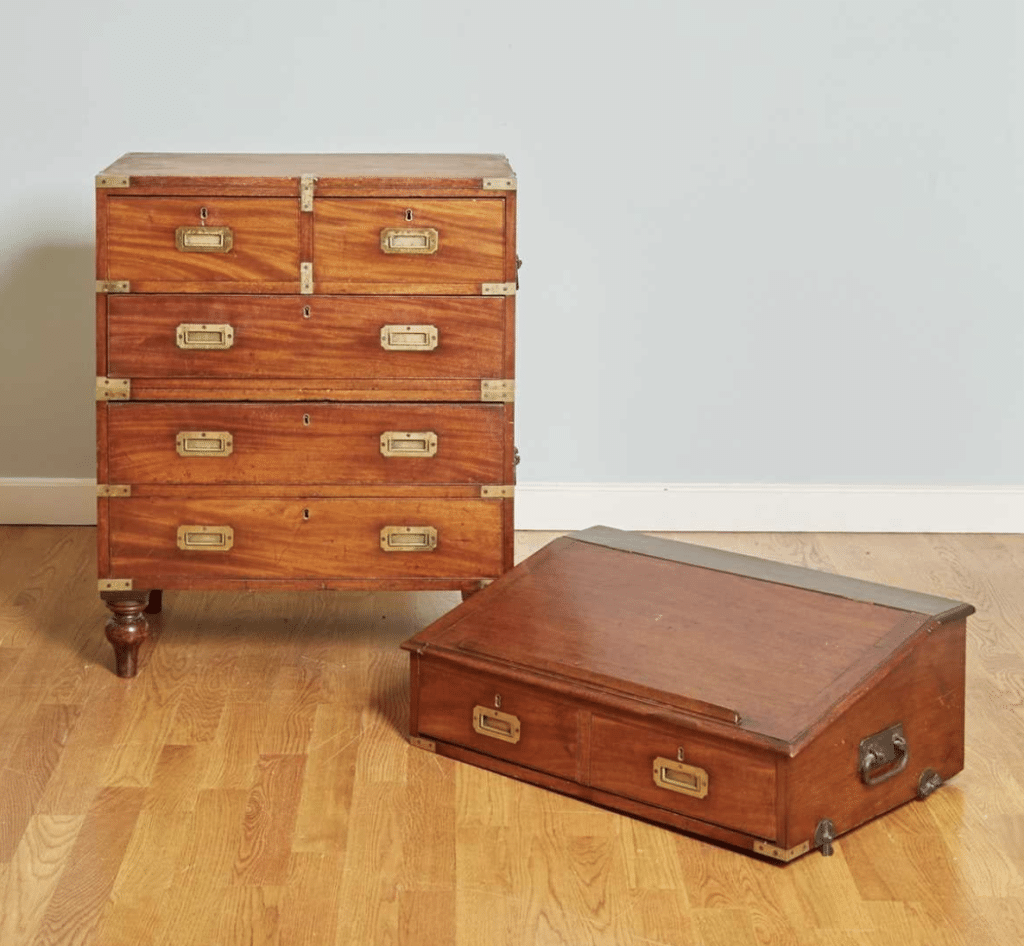
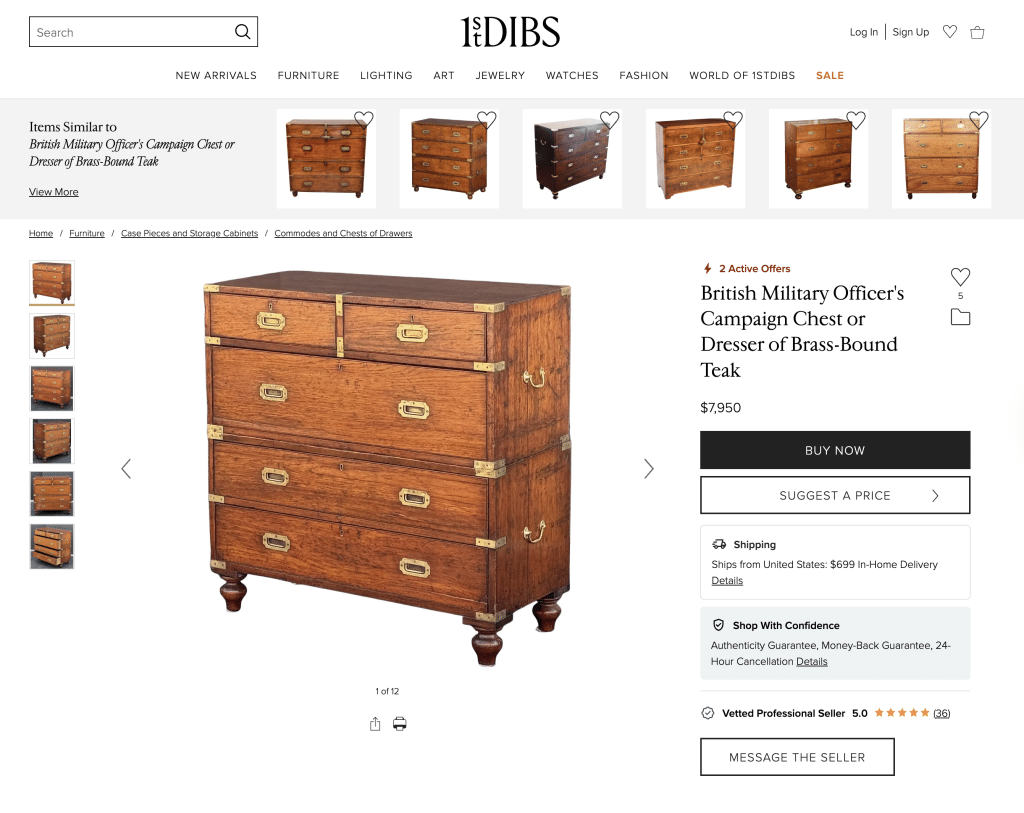

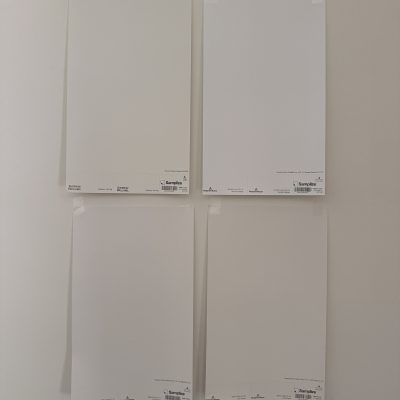
I would opt for the lighter color, like the one pictured, trying to be as original AND traditional as possible.
Thanks for your input, Jeff. I’m really loving the lighter wood too… decisions, decisions!
Ooh, tough choice. My first instinct is not to paint wood, but that oxblood could be so chic! And it feels very close to a mahogany wood tone anyway… I’m torn between the mahogany and oxblood. Can’t wait to see what you come up with!
Hello, good morning! If you’re going with the green plaid wallpaper, I think the Oxblood is the best choice. It will stand out a bit, but that’s a good thing.
I’m loving these design posts, btw! OG blog reader, here.
Ooh… good point! Thank you for being here, Jennifer!
Wow. 3 really good choices. I would love to see the oxblood in the space. Can’t really go wrong with any of them. Can’t wait to see the process!!
Hi Jen,
I love all the choices you are considering but being an Air Force brat growing up and a Marine Corps Officer traveling the world I personally would go for the traditional look…but that is just me! I know whatever choice you make it will be awesome on so many levels. Love your energy, creativity, and entrepreneurial spirit! Looking forward to the Campaign Chest results! Cheers!
Thank you for such a thoughtful comment, Cullen! And thank you for your service. I do love that traditional look… I’m so torn!
Great post! The connection between military history and furniture design is fascinating, especially how portability influenced the structure and details.
The furniture in this style is beautiful, with a history and much more durable and stylish than the one currently made of plywood
This design looks so impressive. I love it.
My personal preference would be the visual relief from everything-wood. I’m partial to oxblood, because I believe every room needs a pop of red, and I also believe the red will bridge better to the deco style in the adjacent basement theater space.
All good points, Kim! This is going to be a tough one to decide on…