After everything I shared last week, I want to bring you into a long-overdue project I’m working on – one that’s been rattling around in my brain for years: our built-in mudroom lockers.
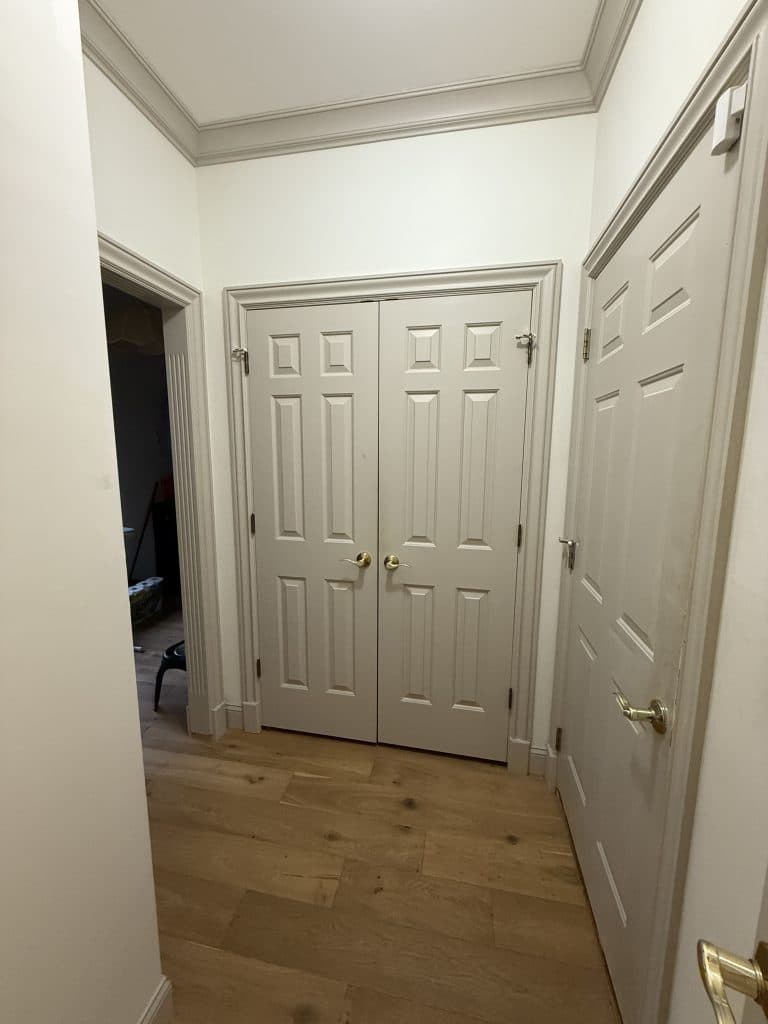
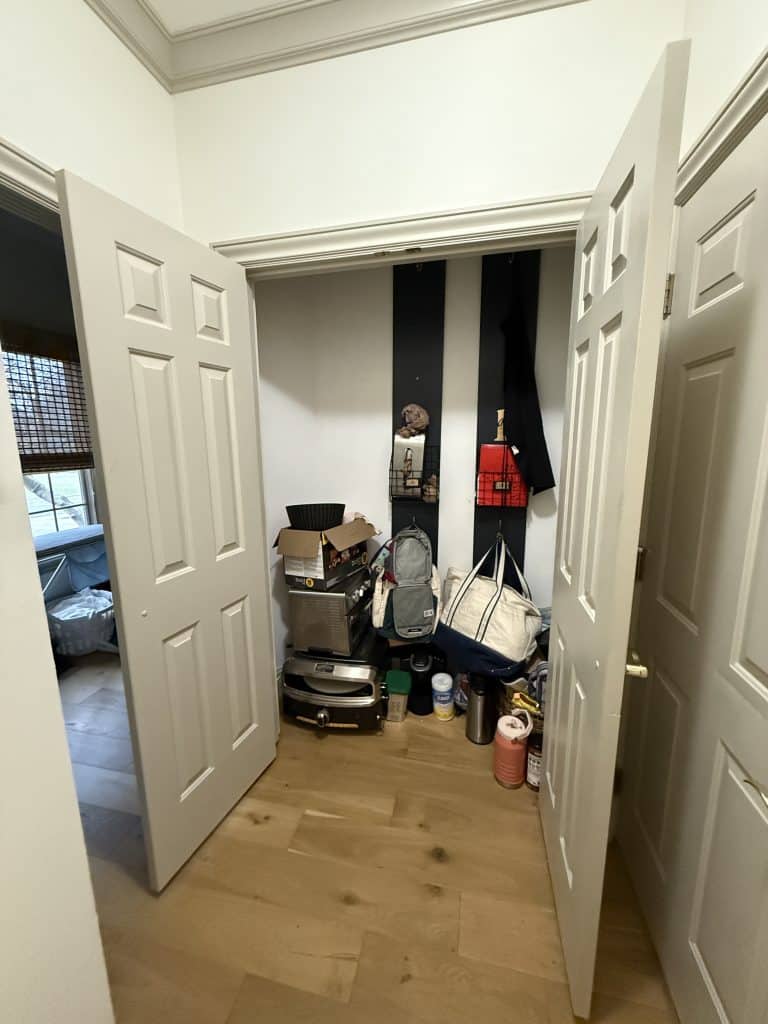
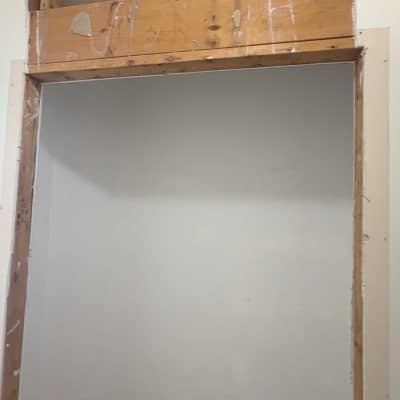
Our dysfunctional pantry-closet-turned-catch-all is wedged between our garage door, laundry room, and kitchen. We pass through this space a dozen times a day, and for the past few years, it hasn’t served us well. When we renovated our kitchen, we added more functional pantry storage directly in the kitchen. That meant this closet lost its purpose and quickly became a dumping ground for everything we didn’t have a better home for.
The Goal for this Mudroom Locker Transformation
The time has finally come: I’m transforming it into built-in mudroom lockers with cabinets above and drawers below. The goal is to create storage that’s both practical and so well integrated, it looks as though it’s part of the home’s original design. I’m excited about this one. I have a feeling it’s going to be extra special.
I’m also thrilled to be partnering with one of my dream brands, SawStop, on this project. Not only am I creating a how-to video for SawStop’s YouTube channel, but I’ll also be publishing a much deeper, start-to-finish video on my own YouTube channel.
Here are the ‘before’ photos (don’t judge!):
I’m happy to finally tackle this project – and invite you into my whole process, including:
the design decisions
the materials I’m choosing carefully (and why)
the framework I use when planning a project like this
the demo and build process
moments where things don’t go according to plan (they never do) and how we pivot and problem-solve (my favorite pastime)
and practical details you can actually use in your own home
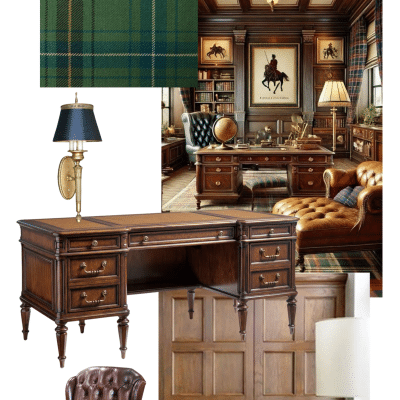
The Design Plan for our Built-In Mudroom Lockers
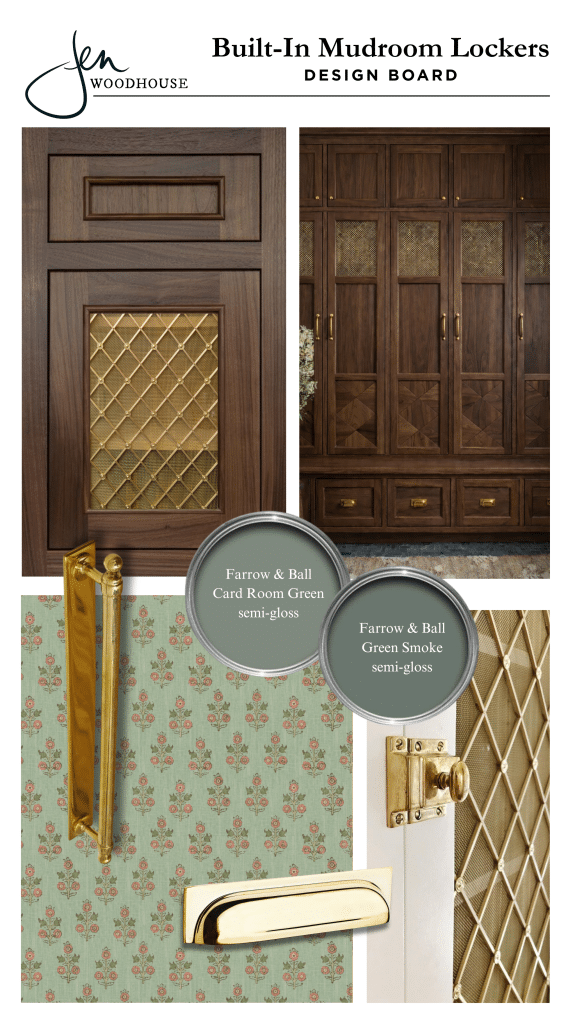
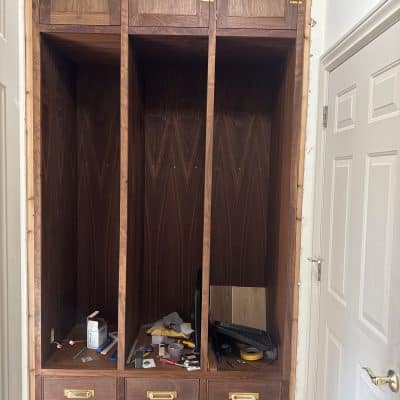
Before we get into the workshop, let’s talk design and how it ties into our home’s character. Our house is a French colonial, so the design needed to complement that style in a way that feels cohesive and intentional, without being rigid. For the mudroom lockers, I chose walnut for its rich, classic look and beautiful brass mesh panels on the locker doors to improve airflow. The floral wallpaper brings a charming, European cottage-inspired vibe, and I’m continuing our home’s signature contrast trim in this space as well. Every element is meant to feel like it truly belongs here, both functionally and aesthetically.
The Planning Framework
Now, here’s the framework I use to plan projects like these:
1. Start with function.
Who uses this space?
How do we need it to function day-to-day?
What needs to be hidden vs. what needs to be accessible?
What feeling do I want the design to evoke?
For this pantry closet, our lockers have to handle real life: backpacks, coats, shoes, clutter – the whole kitchen sink.
2. Define the constraints
wall dimensions
ceiling height
door clearances
outlets, wiring, etc.
3. Decide what must be custom (and what doesn’t)
What needs to fit exactly in this space?
What could be simplified without losing quality?
This keeps projects realistic and budget-conscious.
4. Nail down the design before the build.
I take measurements, sketch the design in SketchUp, and create a general roadmap that takes me step-by-step through the project. While it’s not gospel, it’s a solid place to start.
The General Road Map
For the demo process, my first steps will be to remove the trim, door jamb, and doors. Once those are out, I’ll raise the opening after double-checking that the wall isn’t load-bearing. (It likely isn’t, since the header just supports a very short span and the ceiling inside matches the rest of the space at 9 feet high.)
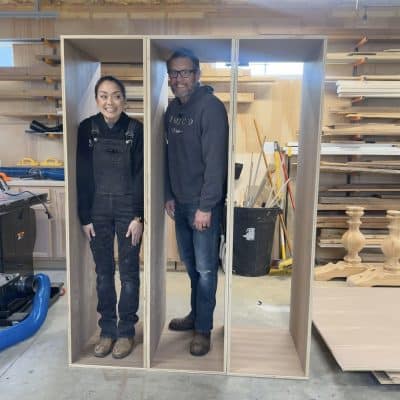
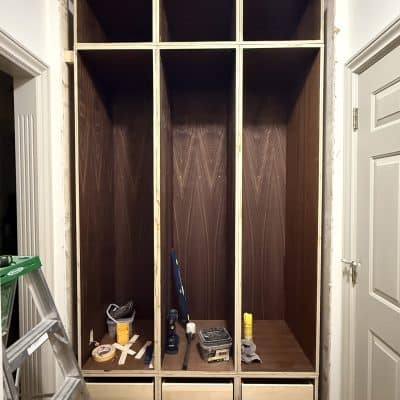
Once the opening is ready, I’ll build the cabinet carcasses right into the space. Above, there will be a cabinet for extra storage. Below, three tall lockers will hold coats, bags, and backpacks, and three drawers underneath will keep shoes and miscellaneous items organized. This layout should maximize functionality and flow while seamlessly integrating with the new mudroom design.
Now that we have a plan and a design board in hand, it’s time to dive in and bring this vision to life. Of course, even the best-laid plans tend to take a few unexpected turns, so wish us luck! I’ll be sharing the wins, the hiccups, and all the in-between moments as we make progress. If you want a peek at the behind-the-scenes decisions and real-time updates, come follow along on Instagram and watch this mudroom finally take shape.
P.S. If you’re planning a built-in this year, comment below and tell me what space you’re tackling. Mudroom? Laundry? Office? I read every response.

I love your work and can’t wait to give your design a try.!